How to Grow Rosemary Indoors (and Keep It Alive in Winter)
By 18300275 Canada Inc. · Published
Quick answer
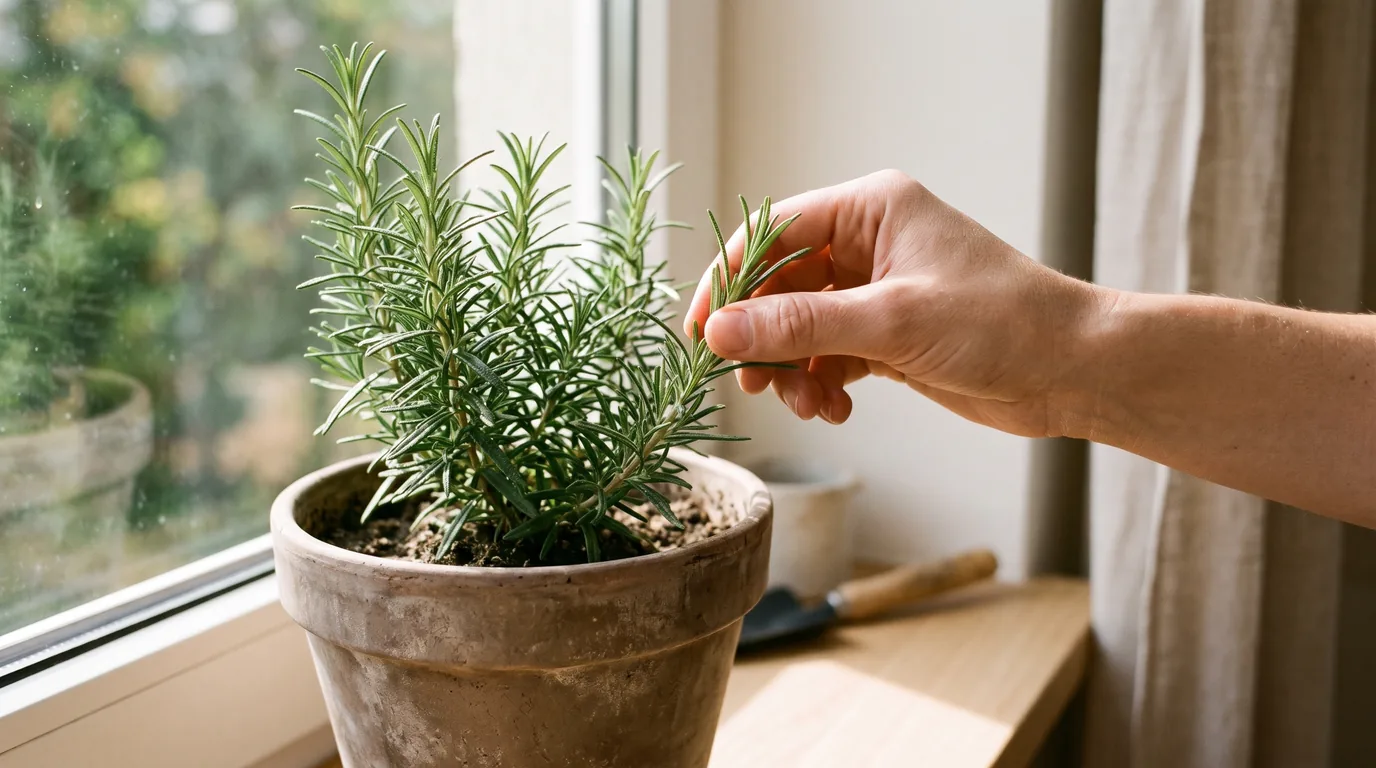
Rosemary needs more light and less water than most herbs. Set it in your brightest window, preferably facing south, or under a grow light with 14–16 hours of light daily. Keep it in a cool room, roughly 45 to 60°F if you can, and away from heaters. Grow it in a clay pot with fast-draining mix and water only when the mix has become quite dry. Expect slow growth in winter; that is normal.
Why indoor rosemary is tricky
Rosemary is an evergreen shrub from dry, rocky, sunny places around the Mediterranean. Penn State Extension rates it hardy only in USDA zones 8 to 10, and University of Illinois Extension says it is not reliably hardy in zone 6 or colder, so in much of the US it has to come inside for winter or live indoors year-round.
The problem is that a house in winter is almost the opposite of its home climate: dim light, warm rooms and dry air. Penn State Extension sums up the risks as low light combined with too little or too much water. Each problem makes the others worse. In weak light the plant uses little water, so soil stays wet longer, and wet soil in a pot leads to root rot. Get the light right first and watering becomes much easier.
Light: as much as you can give
Penn State Extension groups rosemary with the herbs that need full direct sun, about six hours a day, and recommends a south-facing window or supplemental lighting. University of New Hampshire Extension also advises placing it in front of a south window.
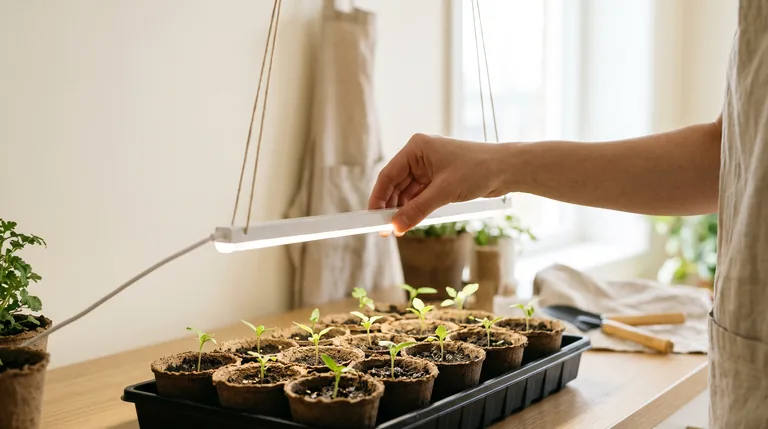
Few homes have six hours of winter sun on any windowsill, so a grow light is often what makes the difference. Penn State suggests herbs sit 6 to 12 inches below two 40-watt cool white fluorescent tubes, or an LED with comparable output, with 14–16 hours of light daily. Rosemary benefits from the closer end of that range. Our guides to choosing a grow light and setting its height walk through the details.
Turn the pot every few days so all sides get light and the plant grows evenly.
Temperature: cooler is better
This is the advice that surprises people. A warm living room is not the best place for rosemary in winter. Extension sources recommend a cool room, though their ranges differ:
- University of New Hampshire Extension suggests 45 to 55°F and says it can improve survival, partly because the plant then needs less water.
- University of Illinois Extension describes a cool, even cold, sunny location as ideal.
- Penn State Extension's general guidance for indoor herbs is at least 65 to 70°F by day and 55 to 60°F at night.
In practice, aim for the coolest bright spot you have: an unheated sunroom, an enclosed porch that stays above freezing, or a window in a room you keep cooler. If your only option is a warm room, the plant can still survive, but give it even more light and be extra careful with water.
Pot and potting mix
- Use a clay pot. Penn State Extension notes that clay pots let the mix dry quickly, which suits rosemary's dislike of wet roots.
- Choose a fast-draining mix. Outdoors, Penn State describes rosemary's ideal soil as light, sandy or gravelly, with a pH of 6.5 to 7.0. Indoors, a packaged potting mix with extra perlite or coarse sand gets close.
- Make sure the pot drains. Never let it stand in a saucer of water.
- Only move up one pot size. An oversized pot holds more wet mix than the roots can use.
Watering: the hardest part
University of New Hampshire Extension calls watering the single most difficult part of keeping rosemary alive through winter. The plant can dry out and suffer, but it will also rot if kept too moist. Penn State Extension warns that overwatering is especially dangerous for potted rosemary brought indoors, and University of Illinois Extension cautions that browning tips do not automatically mean the plant needs more water.
- Push a finger an inch or two into the mix. If it feels damp, wait.
- When the mix is quite dry, soak it until water flows out the bottom.
- Let the pot drain and empty the saucer.
- Check again in a few days. Lift the pot each time; a dry pot is noticeably lighter, and you will soon learn the difference.
In a cool room under modest light, watering may be needed only every week or two. In a warm, bright spot it will be more often. The pot, not the calendar, tells you.
Humidity and air
Heated homes have dry air in winter. University of Illinois Extension notes that rosemary dries out quickly indoors, which can show up as brown leaf tips and dieback, and suggests setting the pot on a saucer of pebbles and water so the pot sits above the waterline. Keeping the plant cool also helps.
Good air movement matters too. Penn State Extension says rosemary is prone to powdery mildew, a white dusty coating on the leaves, when air circulation is poor. Do not crowd it among other plants, and a small fan on low nearby can help.
Bringing a garden plant indoors
Extension sources agree that rosemary dug out of a garden bed often fails indoors. Both Illinois and New Hampshire recommend growing it in a container all summer if you plan to bring it in, because the root damage from digging and repotting adds stress at a bad time. Illinois suggests leaving the pot outside into fall and bringing it in shortly before frost; Penn State suggests moving it indoors 2 to 3 weeks before your first frost date. Then in spring, once frost danger has passed, it can go back outside.
Starting new plants
Rosemary is slow and unreliable from seed. Penn State Extension recommends cuttings instead:
- Cut a 6-inch piece from a healthy stem tip.
- Strip the leaves from the lower part of the stem.
- Rooting hormone on the cut end helps, though it is optional.
- Insert it in a moist, airy, soilless mix and keep it warm, about 70 to 75°F. Penn State says cuttings root in about 10 to 20 days with bottom heat.
- Pot the rooted cutting into its own small clay pot.
Harvesting and pruning
Snip the soft green tips as you need them, cutting just above a pair of leaves. University of Illinois Extension notes that pruning encourages a tighter, more compact plant. Go easy in winter: growth is slow then, and the plant needs its foliage. Take more freely in spring and summer when it is growing well. Penn State Extension notes that the stems turn woody with age, so most of your harvest will come from the newer green tips.
Illinois Extension also says that regular feeding gives the best foliage for harvest. Indoors in winter, when growth is slow, little or no fertilizer is needed. Resume light feeding when new growth picks up in spring.
Troubleshooting
| Symptom | Likely cause | What to do |
|---|---|---|
| Long, thin, pale shoots | Not enough light | Move to a south window or add a grow light |
| Needles brown or curling; plant wilts while soil is wet | Root rot from overwatering | Check roots; let mix dry further between waterings; repot into fresh mix if roots are dark and soft |
| Brown tips; soil bone dry | Drought stress or very dry air | Water thoroughly; add a pebble tray; move away from heat |
| White powdery coating | Powdery mildew | Improve air flow, give more space, remove the worst stems |
| Fine webbing, speckled needles | Spider mites, which Penn State lists among indoor pests | Rinse the plant under the shower; UNH notes a strong stream of plain water can knock mites off |
| Very little new growth in winter | Normal in low light and cool rooms | Wait for spring; avoid feeding or overwatering to push growth |
The Missouri Botanical Garden's guide to herb problems indoors lists poor light and overwatering among the most common causes of trouble, and rosemary is especially sensitive to both. If yours is struggling, fix the light first.
Pets
If you have cats or dogs, check the ASPCA plant toxicity database before adding any new plant to your home.
Frequently asked questions
Why does rosemary die indoors in winter?
Usually from a mix of too little light and the wrong watering. Indoor winter light is weak, so the plant grows slowly and uses little water, and soggy soil then rots the roots. Dry heated air and the stress of being dug from the garden add to it. Strong light from a south window or a lamp, a cool room and careful watering solve most cases.
How often should I water rosemary indoors?
There is no fixed schedule. Check the potting mix and water only when it has become quite dry, then water until it drains from the bottom. In a cool room in winter that may be every week or two; in a warm, bright spot it will be more often. University of New Hampshire Extension calls watering the hardest part of keeping rosemary alive indoors.
Can I grow rosemary from seed indoors?
You can, but it is slow. University of Illinois Extension says rosemary seed germinates very slowly and can take years to become a usable plant, and Penn State notes named varieties do not come true from seed. Rooting a cutting or buying a young plant is much faster.
Why are my rosemary needles turning brown at the tips?
Brown tips can come from dry air, from the plant drying out completely, or from root rot caused by overwatering. Check the roots and soil before you water more. Penn State Extension lists tip browning as a sign of root rot, while Illinois Extension links it to dry indoor air.
Is rosemary safe for cats and dogs?
Look up each herb in the ASPCA plant toxicity database for current guidance before bringing it into a home with pets.
Sources
- Rosemary — University of Illinois Extension
- Herb garden plants: rosemary — Penn State Extension
- Houseplant winter care Q&A — University of New Hampshire Extension
- Growing herbs indoors — Penn State Extension
- Herb problems indoors — Missouri Botanical Garden
- Lighting for indoor plants and starting seeds — University of Minnesota Extension
- Toxic and non-toxic plants — ASPCA Animal Poison Control
Sources last checked November 2026.