How to Grow Cilantro Indoors
By 18300275 Canada Inc. · Published
Quick answer
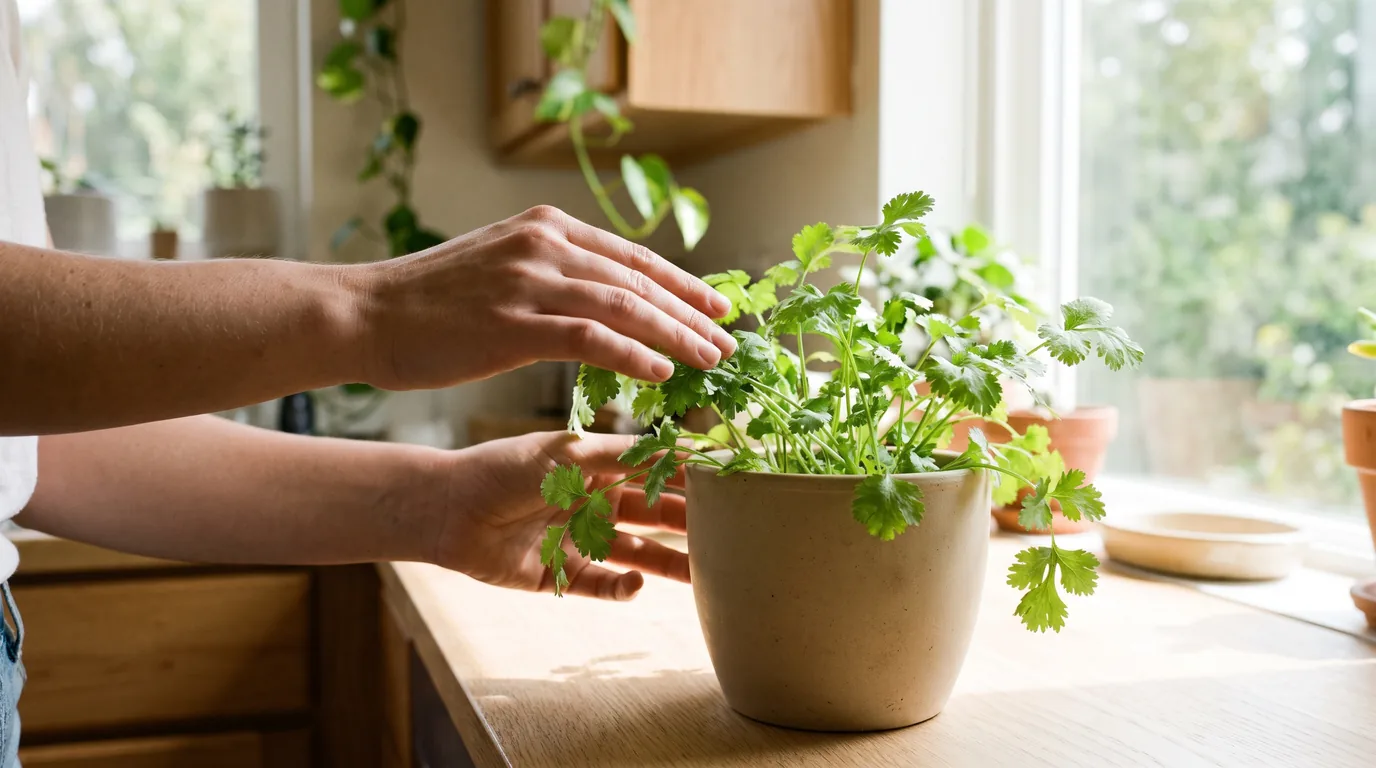
Sow cilantro seed directly into a deep pot with drainage, about ¼ to ½ inch deep, and keep the mix evenly moist. Give it a bright, cool spot: an east or south window, or a grow light, in a room that stays in the 60s °F. Start cutting when plants reach about 6 inches. Every pot will eventually flower and stop making good leaves, so sow a fresh pot every 2 to 4 weeks for a steady supply.
Why cilantro behaves differently from other herbs
Most kitchen herbs keep producing for months if you pick them well. Cilantro does not. It is a fast annual that wants to grow a quick rosette of leaves, flower, set seed and finish. Gardeners call the switch to flowering "bolting." Once it starts, the plant sends up a tall stalk with finely divided, feathery leaves, and the University of Wisconsin–Madison Extension notes that the leaves can develop an unpleasant flavor at this stage. Penn State Extension describes the result as bitter.
Heat is the main trigger, and long days add to it. Wisconsin Extension points out that even varieties sold as slow to bolt do not hold up well in high temperatures and long days. Indoors you control both, which is one advantage of growing cilantro inside: a cool room through fall, winter and spring suits it far better than a midsummer garden.
The other piece of the plan is accepting that each pot has a short life and planning a new one before the old one finishes.
What you need
- A deep pot with drainage holes. Cilantro grows a long taproot, and Penn State Extension advises deep pots for herbs with taproots. A wider pot lets you grow several plants together.
- A light, packaged potting mix. Penn State Extension recommends containers with drainage and a mix that drains well for indoor herbs.
- Fresh seed. Look for varieties described as slow bolting, such as 'Calypso', 'Santo', 'Marino', 'Leisure' or 'Cruiser'. Penn State Extension reports 'Calypso' as the slowest to bolt of the common types, about three weeks behind 'Santo'. University of Illinois Extension also lists a variety bred for pots, 'Pot Cilantro 99057'.
- A bright, cool spot. More on this below.
How to sow cilantro indoors
- Fill the pot with moist potting mix to about an inch below the rim.
- Sow the seeds where they will grow. Both Wisconsin and Illinois Extension say cilantro transplants poorly because of its taproot, so skip seed trays. Scatter seeds across the surface and cover them with ¼ to ½ inch of mix.
- Keep the surface moist until seedlings appear. A cover of plastic wrap helps hold moisture; remove it as soon as you see green.
- Move the pot to strong light the moment seedlings emerge so they do not stretch.
- Thin the seedlings. Wisconsin Extension suggests 3 to 6 inches between plants, while Penn State suggests 6 to 8 inches. In a pot, the closer spacing works if you plan to cut the whole pot at once; wider spacing gives larger individual plants.
Light
Outdoors, cilantro grows best in full sun but tolerates very light shade, according to Wisconsin Extension. Indoors, it is one of the more forgiving herbs. Penn State Extension places cilantro in the group of herbs that can manage with 2 to 6 hours of direct sun, while sun lovers such as rosemary and thyme want the full six or more.
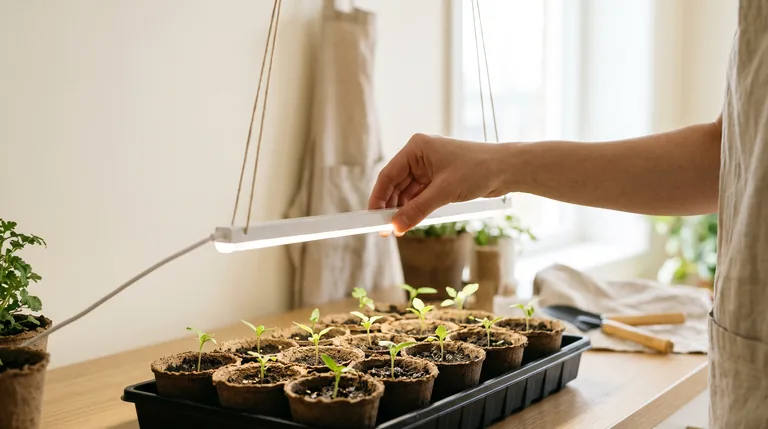
An east- or south-facing window is ideal. If your plants grow tall and floppy with pale leaves, they need more light. A grow light is the reliable answer in winter. Penn State suggests placing herbs 6 to 12 inches below a pair of 40-watt cool white fluorescent tubes, or an LED of similar output, with 14–16 hours of light daily. None of the sources we used set out a separate light schedule for cilantro, so start with the general herb guidance and keep the room cool, since warmth is the bigger bolting trigger. See how far grow lights should be from plants for setting the height.
Temperature: keep it cool
Penn State Extension recommends that indoor herbs get at least 65 to 70°F during the day and 55 to 60°F at night. Cilantro is happiest toward the cool end of that range. Keep pots away from heating vents, radiators, the top of the refrigerator and any windowsill that bakes in the afternoon. A bright spot in a cooler room is better than a warm, sunny one.
Watering and feeding
Wisconsin Extension advises keeping cilantro evenly moist throughout its growth. Penn State Extension links steady watering with keeping cilantro's roots cool outdoors, and the same habit helps indoors. Check small pots every day or two, especially under a grow light. Water thoroughly, let the excess run out, and pour away what collects in the saucer.
Penn State Extension suggests a low dose of water-soluble fertilizer every two weeks for indoor herbs, and warns that feeding more often can weaken their aroma and taste. Cilantro grown for a few weeks in fresh potting mix may need little or no feeding at all.
Harvesting
All three extension sources agree on when to start: once plants are about 6 inches tall. After that you have two approaches.
- Pick a little at a time. Wisconsin Extension notes that removing the older outer leaves encourages the plant to keep making new ones from the center. Penn State suggests taking at most a third of the plant at each harvest.
- Cut the whole pot. Wisconsin Extension says you can cut plants about an inch above the soil and they may regrow for a second, smaller cutting.
Penn State and Illinois Extension both say cut cilantro keeps about a week in the refrigerator, loosely wrapped. Cooking or drying dulls the flavor, so it is best added fresh at the end.
Succession sowing: the real secret
Because every pot bolts eventually, the way to have cilantro on hand all the time is to start new pots on a schedule. The extension sources give slightly different intervals:
- University of Wisconsin–Madison: every 2 to 3 weeks.
- Penn State: every 2 to 4 weeks.
- University of Illinois: every 3 to 4 weeks.
Indoors, a practical plan is two or three pots in rotation. Sow one, sow the next about three weeks later, and sow a third three weeks after that. By the time the first pot starts to flower, the second is ready to pick. If you use a lot of cilantro, shorten the gap to two weeks; if you use a little, stretch it to four.
When it bolts anyway
Watch for the center of the plant stretching upward and the new leaves turning thin and ferny. At that point, pick any good leaves that remain. You can then compost the plant and reuse the pot with fresh mix, or let it flower. The small white or pale pink flowers are pretty, and the seeds that follow are coriander. Wisconsin Extension says to collect them when they have turned light brown, usually 2 to 3 weeks after flowering.
Common problems
| Symptom | Likely cause | What to do |
|---|---|---|
| Tall, weak, pale seedlings | Too little light | Find a brighter window or bring the grow light lower |
| Plant flowers within weeks | Too warm, or simply reaching the end of its life | Move to a cooler spot, water evenly, sow the next pot now |
| Wilting after transplanting | Damaged taproot | Sow directly in the final pot next time |
| Small insects clustered under leaves | Aphids, which Penn State lists as the most common cilantro pest | Rinse them off under the tap; cut off and bin heavily infested stems |
| Water-soaked spots with yellow edges | Bacterial leaf spot, per Penn State | Remove affected plants, water the soil rather than the leaves, start fresh |
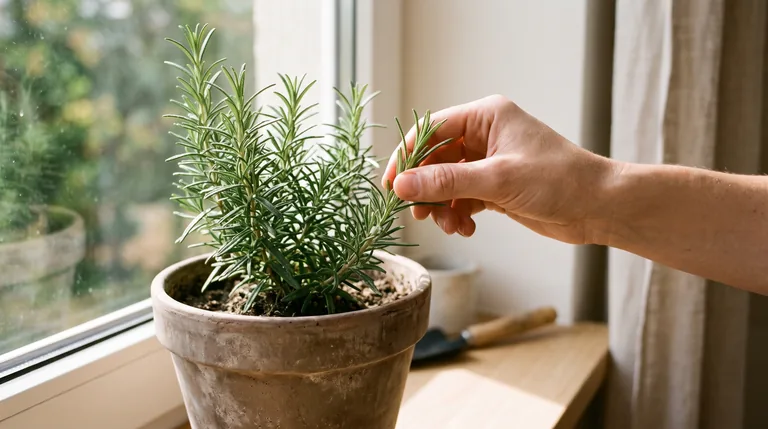
Growing other herbs too? Rosemary wants almost the opposite care: drier soil and even more light. Our indoor herbs guide covers the basics for the rest.
Frequently asked questions
Why does my indoor cilantro keep bolting?
Cilantro is a cool-season plant, and warmth plus long days push it to flower. Indoors, that usually means a pot near a heater, on a sunny sill that heats up, or simply a plant that has reached the end of its short leafy stage. Keep it cool, harvest often, choose a slow-bolting variety and sow new pots every few weeks.
Can I regrow cilantro from a store-bought bunch?
Not reliably. Cilantro grows from a single taproot and does not root from cut stems the way basil or mint can. Sowing seed in the pot where it will grow is the dependable method.
How long does indoor cilantro take to be ready?
Start picking when plants are about 6 inches tall. University of Wisconsin–Madison Extension gives 45 to 80 days to a leaf harvest, and some fast varieties are listed at 28 to 40 days. Indoors, low winter light can slow this down.
Can cilantro grow in a north window?
It is one of the herbs that copes best with less sun, but a north window is usually too dim for good growth. Penn State Extension lists cilantro among herbs that need only 2 to 6 hours of direct sun. An east window or a grow light is a better bet.
Is coriander the same plant as cilantro?
Yes. In the US, the leaves are called cilantro and the dried seeds are called coriander. If a pot bolts, you can let it finish flowering and collect the seeds when they turn light brown.
Sources
- Cilantro / coriander, Coriandrum sativum — University of Wisconsin–Madison Extension
- Cilantro — University of Illinois Extension
- Cilantro, a unique culinary herb — Penn State Extension
- Growing herbs indoors — Penn State Extension
- Lighting for indoor plants and starting seeds — University of Minnesota Extension
Sources last checked November 2026.