Hoya Care: Light, Water and Getting Your Hoya to Bloom
By 18300275 Canada Inc. · Published
Quick answer
Hoyas are easy to keep alive but need strong light to flower. Put yours beside a bright south, east or west window, where it gets bright light all day and some gentle direct sun. Use a fast-draining mix, let it dry before watering, and keep the plant slightly root-bound. Leave old flower spurs on the plant, and once buds appear, do not move or turn the pot. Above all, be patient: hoyas bloom slowly.
Meet the hoya
Hoyas, also called wax plants or porcelain flowers, are vining plants from Southeast Asia and Australia with thick, waxy leaves. University of Illinois Extension describes them as semi-succulent epiphytes: in the wild many grow on trees rather than in soil, and their leaves store water. That explains most of their care. They want air around their roots, they dislike soggy mix, and a forgotten watering bothers them much less than an extra one.
The most common type in homes is Hoya carnosa, with many varieties, including ones with twisted "rope" leaves and others with pink, cream and green variegation. Penn State Extension also mentions Hoya kerrii, the heart-leaf hoya, and the strongly scented Hoya odorata. Penn State notes that the species grown as houseplants share similar care needs, so the advice below applies broadly.
The flowers are the prize: round clusters of small, star-shaped blooms that look almost artificial, often fragrant, sometimes dripping nectar. Getting them takes the right light and some patience.
Light: the key to flowers
A hoya will live in medium light, but it is far more likely to bloom in bright light. University of Minnesota Extension lists hoya among medium-light plants, and adds that most plants grown for flowers need high light.
Sources give somewhat different targets:
- Penn State Extension: medium to bright, indirect light, ideally right beside a south-, east- or west-facing window.
- University of Illinois Extension: bright, indirect light, adding that it may take some moving around to find the spot where yours will flower.
- Missouri Botanical Garden: bright light with direct sun for half the day or more for Hoya carnosa, though it tolerates sun filtered by a curtain and bright indirect light.
Put together, the safest plan is the brightest spot you have where the leaves do not scorch. In most homes that means an east window, or a south or west one filtered by a sheer curtain in summer. If leaves develop pale, bleached or brown patches, the sun is too strong. If the plant makes long bare stems with few leaves, it needs more light.
A grow light can stand in for a bright window. University of Minnesota Extension suggests flowering houseplants sit 6 to 12 inches below the light with 14–16 hours of light daily. Our guide to choosing a grow light explains the options.
How to get a hoya to bloom
- Give it time. Penn State Extension notes that most hoyas grow slowly and bloom slowly too. A young plant or fresh cutting can take a long time to reach flowering size, so a hoya that is growing well but not yet blooming is not necessarily doing anything wrong.
- Raise the light. Move it to your brightest suitable spot, or add a grow light. Light is the factor you can change most easily.
- Keep it snug in its pot. Penn State Extension says hoyas do not mind being a little root-bound and advises against rushing to repot. A plant with room to spare tends to grow roots and leaves instead of flowers.
- Leave the spurs. Hoyas flower from short stubby stalks called spurs or peduncles. The Missouri Botanical Garden advises not removing them after bloom, because new flowers form on the old spurs. Let spent flowers fall naturally.
- Do not move it once buds appear. Penn State and the Missouri Botanical Garden both say to leave the plant where it is, without moving or rotating it, once flower buds form.
Because new flowers come from old spurs, a hoya that has bloomed once in a spot it likes can flower again from the same places.
Watering
Hoyas store water in their thick leaves and overwatering kills far more of them than underwatering does. Sources differ on exactly how dry to let them get:
- University of Illinois Extension: use a fast-draining mix and let it dry out completely between waterings.
- Penn State Extension: keep the mix moist but not wet, and notes that experienced growers wait until the leaves pucker slightly before watering.
- Missouri Botanical Garden: let the soil dry between waterings, and water less in winter.
A practical middle path: water thoroughly when the top inch or two of mix is dry and the pot feels light, then let excess drain away. If the leaves look slightly soft or puckered, that is Penn State's cue to water. In winter, when light is lower and growth slows, expect to water less often.
Signs of overwatering include yellowing leaves, soft stems near the soil and drooping even though the mix is still wet. University of Wisconsin–Madison Extension describes wilting in wet soil as a typical sign of root rot.
Pot and potting mix
- Mix: fast-draining, as University of Illinois Extension advises for these semi-epiphytes. A packaged houseplant mix loosened with perlite is one simple option.
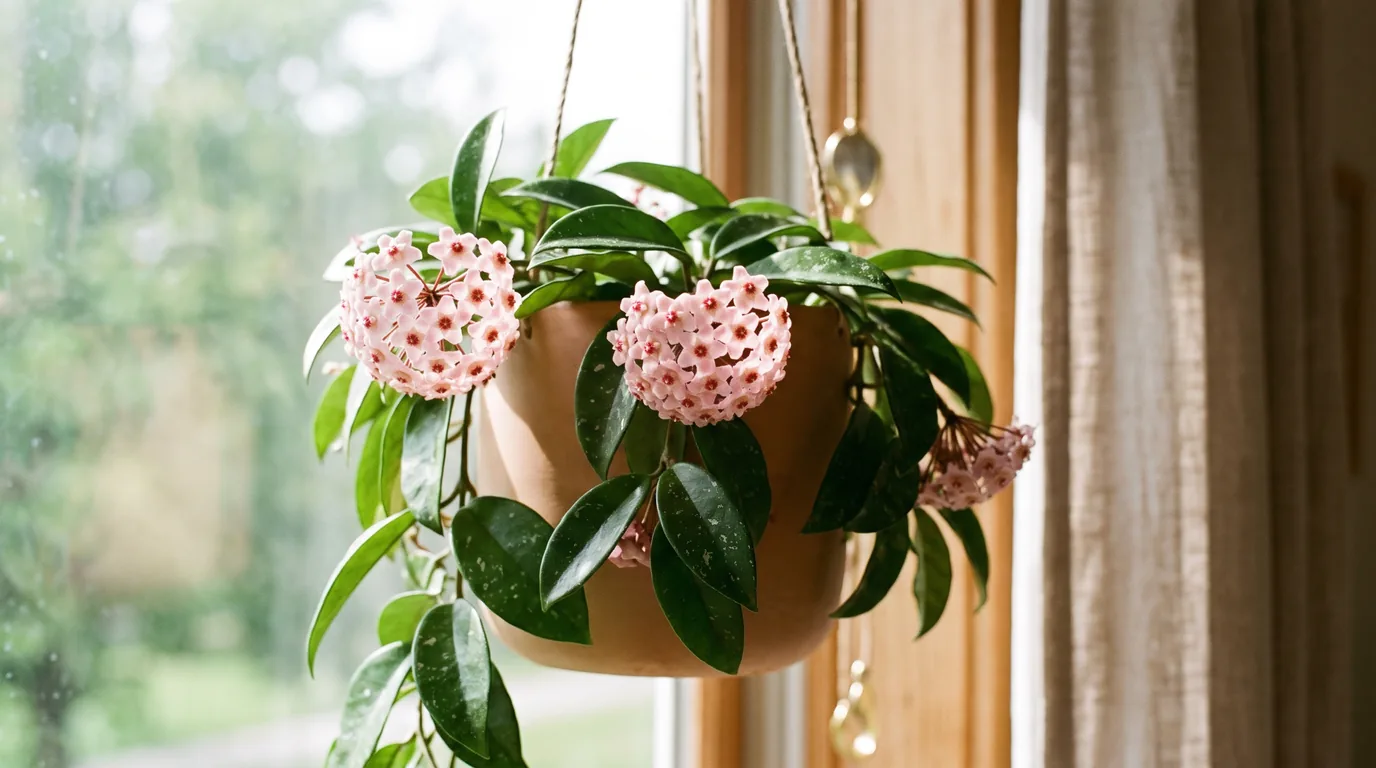
- Pot: always with drainage holes. Hanging pots show off the trailing vines, as in the photo above, or you can train the stems on a hoop or small trellis.
- Repotting: only when roots are packed tight and the mix dries out very quickly after watering. Move up just one pot size.
Temperature and humidity
Normal room temperatures suit hoyas. Mississippi State University Extension gives 65 to 75°F by day, with nights about 10 degrees cooler, as the ideal range for most indoor plants. Keep hoyas away from cold drafts and from glass that gets very cold in winter. Their thick, waxy leaves hold water well, which helps them cope with the dry air of a heated home.
Feeding
None of the hoya sources we used gives a specific feeding plan. General houseplant guidance from Mississippi State University Extension is to fertilize plants that are actively growing and to feed less often, if at all, in winter or low light. Follow the label of a balanced houseplant fertilizer, and remember that extra feeding will not make up for too little light.
Troubleshooting
| Problem | Likely cause | Fix |
|---|---|---|
| Healthy leaves, no flowers | Not enough light, plant too young, or spurs removed | Brighter spot or grow light; keep spurs; wait |
| Buds fall before opening | Possibly the plant was moved or turned after buds formed | Leave it in place until flowers finish |
| Long bare stems, small leaves | Low light | Move closer to a bright window |
| Yellow, soft leaves; wet mix | Overwatering or poor drainage | Let it dry; check roots; repot in airy mix if needed |
| Wrinkled, limp leaves; dry mix | Underwatering | Water thoroughly; leaves should firm up within days |
| Bleached or brown patches | Too much direct sun | Add a sheer curtain or move back slightly |
Pets
Before bringing a hoya into a home with pets, check the ASPCA plant toxicity database for your species.
Frequently asked questions
Why is my hoya not blooming?
The most common reason is not enough light. Patience matters too: hoyas grow slowly and flower slowly, so a young plant may simply not be ready. Moving the plant after buds form, cutting off old flower spurs, and repotting into a much bigger pot can also delay blooms. Give it the brightest spot that does not scorch the leaves, then leave it alone.
Should I cut off hoya flower stems after blooming?
No. Missouri Botanical Garden advises leaving the short flowering stalk, often called a spur or peduncle, in place, because new flowers form on the old spur. Let spent flowers drop on their own.
How often should I water a hoya?
Water when the mix has dried, not on a schedule. Sources differ on how dry: University of Illinois Extension says let it dry completely, while Penn State Extension says keep it moist but not wet, and notes that experienced growers wait until the leaves pucker slightly. Expect to water less in winter.
Does a single-leaf heart hoya grow into a vine?
Usually not. Penn State Extension explains that the single heart-shaped leaves sold as sweetheart hoya are just one leaf of Hoya kerrii and will typically stay as they are rather than grow into a vine.
Is hoya safe for pets?
Look up your species in the ASPCA plant toxicity database, and keep any plant you are unsure about out of reach.
Sources
- Hoyas as houseplants — Penn State Extension
- Trailing houseplants — University of Illinois Extension
- Hoya carnosa (Plant Finder) — Missouri Botanical Garden
- Lighting for indoor plants and starting seeds — University of Minnesota Extension
- Care and selection of indoor plants — Mississippi State University Extension
- Root rots on houseplants — University of Wisconsin–Madison Extension
- Toxic and non-toxic plants — ASPCA Animal Poison Control
Sources last checked November 2026.